Types of Poker Games and How to Play Baccarat
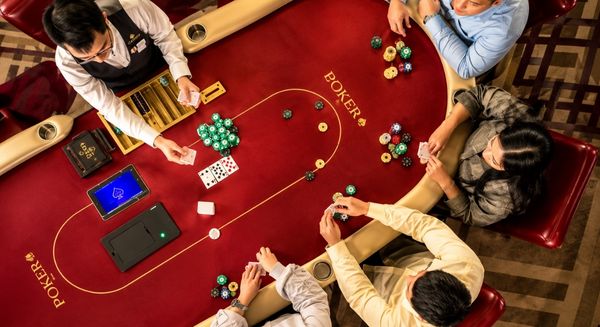
Every poker variant shares the same DNA, even though the rules on the felt can look completely different from one game to the next.
At its core, poker is a betting game built around hand rankings — pairs, straights, flushes, and so on — where players wager on who holds (or can convincingly claim to hold) the strongest hand. What changes between variants is how many cards each player gets, how many are shared with the table, and how betting rounds are structured. Understanding those moving parts makes it much easier to pick up a new variant once you know one well.
Popular Types of Poker Games
These are the variants you’re most likely to encounter in a casino, a home game, or an online poker room.
Texas Hold’em
There are no community cards here. Each player gets seven cards total across multiple betting rounds — three face-down, four face-up — and builds the best five-card hand from what they’re dealt. It rewards memory and attention, since you can see part of every opponent’s hand.
Omaha
Similar structure to Hold’em, but each player receives four hole cards instead of two. The catch: you must use exactly two of your own cards and three community cards to make your final hand — no more, no less. More starting cards means bigger draws and bigger pots.
Chinese Poker
Each player is dealt thirteen cards and splits them into three separate hands of different sizes, then compares each hand against every opponent’s corresponding hand. It’s scored differently from traditional poker and is popular as a casual, social variant.
Is Baccarat a Poker Game?
Worth clearing up before we go further, since the two are often mentioned in the same breath.
Baccarat is not a type of poker. It doesn’t use hand rankings, there’s no bluffing between players, and you’re not competing against the people sitting next to you. Instead, baccarat is a comparing card game played against the banker, using fixed, automatic rules for when a third card gets drawn. It earns a spot on this list because it’s one of the most requested “what else should I learn” games among poker players — it shares a table-game pedigree, moves at a similar rhythm, and is famously simple to pick up in a single hand.
Baccarat Basics: Hands and Card Values
Baccarat is built around two hands and one goal: get closer to 9 than the other side.
Every round deals two hands — the Player hand and the Banker hand. You aren’t required to bet on the hand named after you; you’re simply betting on which of the two will win, or whether they’ll tie. If you are interested in learning more about Baccarat, Panalobet offers one of the best guides on how to play Baccarat from beginner level to advanced.
Card values
- Aces count as
1 - Cards 2 through 9 count as their face value
- 10s and face cards (J, Q, K) count as
0 - If a hand’s total goes above 9, you drop the tens digit — for example, a 7 and an 8 total 15, which counts as 5
What you’re betting on
There are three possible bets each round: Player, Banker, or Tie. The Banker bet wins slightly more often over time, which is why casinos usually charge a small commission on Banker wins to balance the odds.
How to Play Baccarat, Step by Step
A full round from bet to payout — no experience required.
- Place your bet. Choose Player, Banker, or Tie before any cards are dealt.
- Two cards are dealt to each hand. Both the Player and Banker hands get two cards, usually dealt face up.
- Check for a “natural.” If either hand totals 8 or 9 right away, that’s a natural; the round ends immediately and the higher total wins (a tie occurs if both hands match).
- Apply the third-card rule if needed. If neither hand has a natural, fixed house rules determine whether the Player and/or Banker draws a third card. As the player, you don’t make this decision — it’s entirely automatic, so there’s no strategy required here.
- Compare final totals. Whichever hand is closer to 9 wins the round.
- Winning bets are paid out. Player bets typically pay 1:1, Banker bets pay 1:1 minus a small commission (commonly 5%), and Tie bets usually pay 8:1 or 9:1 depending on the table.
Why beginners like it: There are no decisions to make once your bet is placed. No drawing choices, no bluffing, no hand-reading. That makes baccarat one of the fastest casino games to learn in a single sitting. First, try platforms that offer baccarat demo games and try the game hands-on with no risk to your money.
Poker vs. Baccarat at a Glance
Side by side, the differences make it obvious why each game rewards a different kind of player.
| Aspect | Poker | Baccarat |
|---|---|---|
| Who you play against | Other players | The banker (house-run hand) |
| Skill involved | Strategy, reading opponents, bankroll management | Minimal — betting choice only |
| Decisions per round | Multiple betting rounds and choices | One bet, then the outcome plays out automatically |
| Typical pace | Slower, more deliberate | Fast, often under a minute per round |
| Best for | Players who enjoy strategy and competition | Players who want a simple, social casino game |
Frequently Asked Questions
No. Baccarat is a separate casino card game, not a poker variant. Poker involves building hand rankings and betting against other players, while baccarat is a comparing game played against a banker with fixed, automatic drawing rules. They’re often taught together because they share a table-game lineage and typically sit near each other on a casino floor.
Texas Hold’em is generally the easiest starting point. Each player only manages two private cards and shares five community cards, which keeps decisions simple while still leaving plenty of room for real strategy as you improve.
In standard eight-deck baccarat, the Banker bet carries a house edge of roughly 1.06%, the Player bet roughly 1.24%, and the Tie bet is much higher — typically around 14% — which is why most experienced players stick to Banker or Player.
Note: This article is for informational purposes only and does not constitute gambling advice. Please play responsibly. Follow Esports Philippines for more updates on e-gaming, News & Updates happening all around the Philippines.